The technology we are focusing on for 2017 is cryogenic 'cam' (operated) butterfly valve. This was developed by Kenneth (Kenny) McCormack at NASA's John C. Stennis Space Center.
While valves were originally invented by the Romans there have been a proliferation of types of valves adopted for different applications in the 19th and 20th centuries.
A 'valve' in the broadest sense is a device used to stop or control a flow, generally a flow through a pipe. This could be liquid or gas. Some common example of valves include a hose bib or the thing you turn on and off on top of a propane canister.
Valves generally rotate drop or otherwise move to 'put something in the way' that impedes the flow down the pipe. Generally, they must be mechanically 'actuated' to open, close, slow or increase the rate of flow.
Here is a diagram that shows how a standard hose bib works:
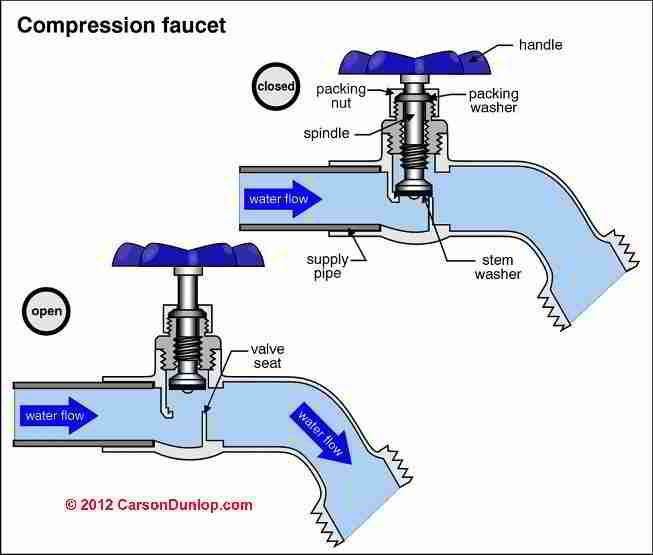
Some important components to note are the handle (how mechanical energy is generated), the 'plug' that moves into the stream to stop the flow, and the stem that provides access to the interior of the pipe to move the plug, but also keeps water from coming up through the handle in the open position. Also, the plug must 'seat' or seal in order to get a tight close that prevents leakage. Because this particular type of valve is operated by a screwing mechanism it can be used to partially 'throttle' or slow (control) the flow. It can also be 'overtightened' to create a stronger seat if pressure or deterioration of the seal is a concern.
A 'butterfly' valve is another common type of valve. Our 'innovation' centers around the use of a 'cam' to create special properties of a butterfly valve.
Here are a couple of good primers on valves: